
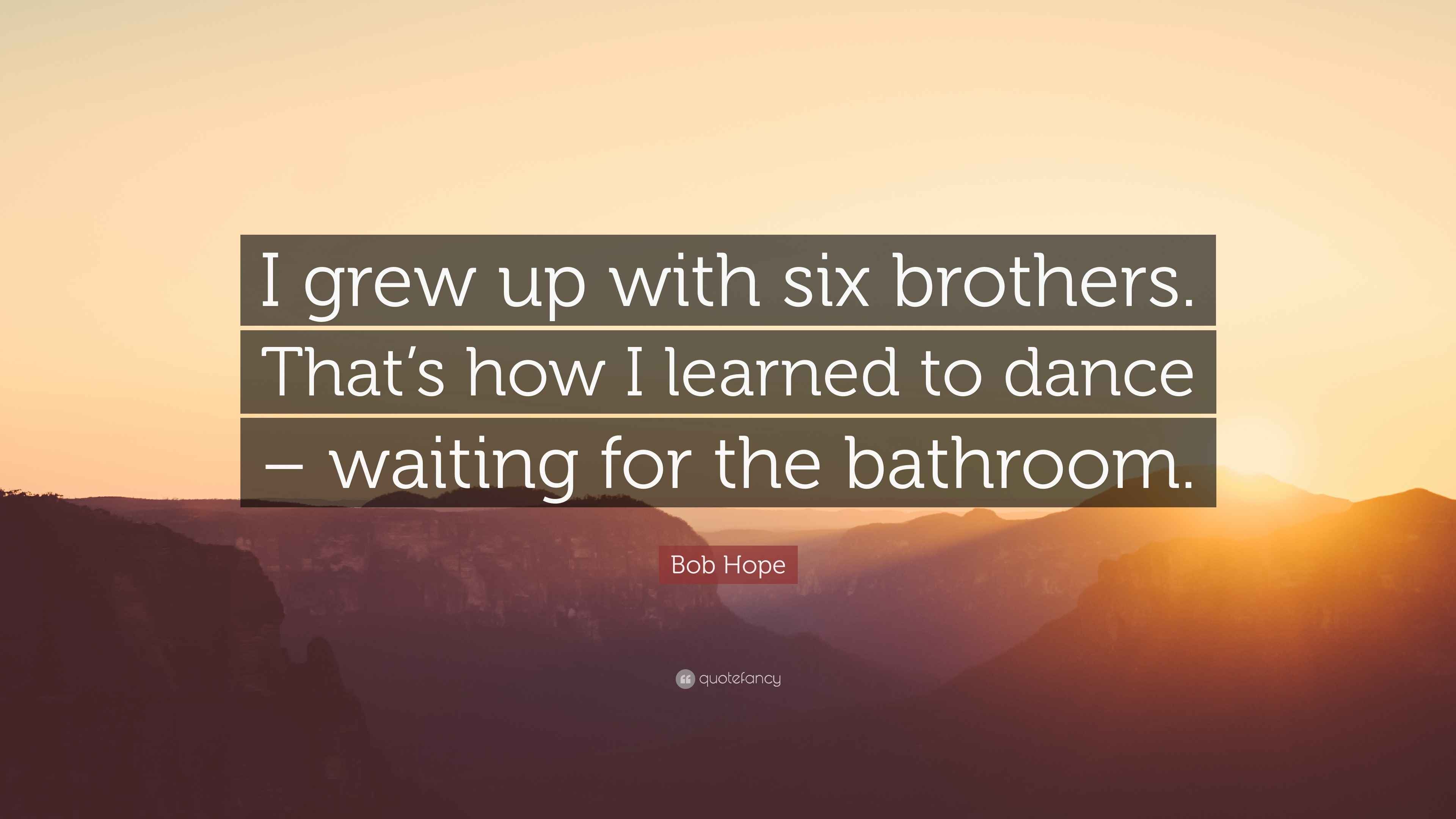
Humor isn’t just relief—it’s survival. For Bob Hope, one of America’s most enduring entertainers, comedy wasn’t just a career. It was a language forged in the chaos of a crowded household, a defense against life’s absurdities, and a lens for understanding relationships, age, and even politics. His now-famous quip—“I grew up with six brothers. That’s how I learned to dance—waiting for the bathroom.”—might sound like classic one-liner fare. But beneath the punchline lies a rich commentary on resilience, timing, and human connection. This quote, often shared as a “quote of the day,” offers more than laughter. It reveals how early family dynamics shape emotional intelligence, conflict navigation, and perspective on life’s biggest themes.
Let’s unpack what seems simple but runs deep: how growing up in a bustling brotherhood taught Bob Hope not just to survive, but to thrive—on stage and in life.
The Real Meaning Behind "I Learned to Dance Waiting for the Bathroom"
At first listen, Bob Hope’s bathroom line is pure comedic timing—self-deprecating, relatable, and instantly vivid. Millions have chuckled at the image of seven boys jostling for space in a cramped morning routine. But the phrase “learned to dance” is more than metaphor. It’s a metaphor for adaptability.
In a home with six brothers, personal space was scarce. Privacy? A myth. Schedules clashed daily. To coexist, you had to develop rhythm—knowing when to step in, when to step back, when to wait your turn. That’s not just household logistics. That’s emotional choreography.
Hope wasn’t just joking about shared bathrooms. He was describing a form of early social training. In large families, especially in pre-war America where his upbringing took place, children learned negotiation, compromise, and humor as tools for peace. The “dance” wasn’t literal. It was the art of moving through life without constant collision.
This mindset shaped his entire career. On stage, timing is everything. In relationships, it’s just as critical. Hope’s ability to read a room, deflect tension with a joke, or pivot gracefully—all trace back to those formative years of brotherly jostling.
Brotherhood as a Foundation for Emotional Intelligence
Growing up with six brothers didn’t just teach Hope patience. It gave him a crash course in human behavior. In any group of siblings, especially boys raised in a traditional household of the early 20th century, conflict was inevitable. But so was alliance-building.
Consider the dynamics:
- Competition for attention: With limited parental bandwidth, each boy had to find a way to stand out.
- Resource sharing: From clothes to food to bathroom time, scarcity bred creativity.
- Hierarchy and pecking orders: Older brothers led, younger ones followed—or rebelled.
- Loyalty under pressure: External threats (schoolyard fights, financial stress) often united the group.
Hope carved out his identity not through physical dominance, but through wit. He wasn’t the strongest or the loudest. He was the funniest. Humor became his currency—earning him both protection and popularity within the family structure.
This is a crucial lesson for modern relationships. Whether in romantic partnerships, friendships, or workplaces, emotional intelligence often trumps raw talent. Knowing when to speak, when to listen, when to crack a joke to ease tension—these are skills honed in environments like Hope’s. His “dance” wasn’t just about waiting. It was about reading cues, anticipating moves, and adjusting in real time.
Humor as a Shield Against Aging and Irrelevance
As Hope aged, his humor evolved—but never disappeared. Even in his 80s and 90s, he continued performing, often poking fun at his own declining mobility, memory, and place in a youth-obsessed entertainment industry.
His quote about dancing while waiting? It takes on new meaning in the context of aging. As physical agility fades, emotional and intellectual agility become more vital. The ability to “dance” through life’s transitions—retirement, loss, health issues—often depends on perspective. And for Hope, humor was that perspective.
Modern research supports this. Studies show that individuals who use humor to cope with aging report higher life satisfaction and lower stress. Hope embodied this principle. He didn’t deny aging. He joked about it. At a White House dinner late in life, he quipped, “I’m so old, I knew Ginger Rogers when she was still doing the dancing.”
This wasn’t just self-deprecation. It was reclamation. By naming his limitations with humor, he defused their power. In relationships, this approach fosters intimacy. Partners who can laugh together at life’s absurdities—bad hair days, forgotten names, aching knees—often build deeper, more resilient bonds.
Bob Hope on Politics: Comedy with a Pulse
Hope’s career spanned nearly a century of American political change. From Roosevelt to Reagan, he performed for troops, advised presidents, and skewered politicians—all with a smirk and a microphone.
His famous USO tours—spanning WWII to the Gulf War—made him a symbol of patriotic humor. But his comedy wasn’t blind loyalty. It was commentary disguised as entertainment.
When he said, “I’ve been in show business 60 years. The only thing I’ve learned is that I don’t know a thing about show business,” he was also subtly critiquing the illusion of expertise—something deeply relevant in politics.
Hope’s political humor worked because it balanced affection with critique. He could roast a president one moment and salute a soldier the next. His brotherhood upbringing likely contributed to this balance. In a large family, you learn early that criticism doesn’t have to mean rejection. You can mock someone and still love them.
This is a rare and valuable skill in today’s polarized climate. Too often, political discourse becomes tribal—us versus them. Hope’s model offers an alternative: humor that humanizes, not dehumanizes. He didn’t punch down. He punched sideways—nudging power with a wink, not a snarl.
Lessons for Modern Relationships: Timing, Tension, and Teasing
What can today’s couples, friends, and colleagues learn from Bob Hope’s life and humor?
- Master the rhythm of conflict
- Just as Hope learned to time his moves around six brothers, successful relationships require timing. Addressing an issue too soon or too late can escalate tension. The “dance” means knowing when to engage and when to wait.
- Use humor to defuse, not dismiss
- Joking during conflict can backfire if it feels like avoidance. Hope’s humor acknowledged discomfort while easing it. A well-placed quip can reset a tense conversation—but only if it’s rooted in mutual respect.
- Embrace shared narratives
- Hope’s bathroom joke became part of his personal mythology. Every family and relationship has its inside stories. Revisiting them—especially the messy, chaotic ones—builds connection.
- Stay agile as life changes
- Whether it’s career shifts, aging parents, or health challenges, life demands adaptation. Hope’s “dance” reminds us that flexibility, not rigidity, ensures longevity.
- Don’t take yourself too seriously
- In relationships, ego is often the real obstacle. Hope’s self-deprecating style made him approachable. In romantic and professional bonds, humility invites closeness.
The Enduring Appeal of Bob Hope’s Wisdom
In an age of viral quotes and 280-character insights, Bob Hope’s bathroom line endures because it’s lived-in wisdom. It doesn’t preach. It observes. It finds profundity in the mundane.
Social media floods us with advice on relationships, aging, and politics—much of it theoretical, abstract, or performative. Hope’s quote stands out because it’s grounded in real experience. It’s not a slogan. It’s a story.
And stories stick.
When people share “I grew up with six brothers…” as a “quote of the day,” they’re not just passing along a laugh. They’re tapping into a deeper truth: that life’s biggest lessons often come from its smallest moments.
How to Apply Hope’s Philosophy Today
You don’t need six brothers to benefit from Hope’s outlook. You just need awareness.
- In family life: Turn daily chaos into shared jokes. The morning scramble, the missed school pickup, the burnt dinner—narrate them with humor.
- At work: Use lightness to ease tension in meetings. A well-timed joke can rebuild rapport faster than any icebreaker.
- In aging: Reframe limitations. Instead of “I can’t do what I used to,” try “I’ve got better stories now.”
- In political talk: Ask, Can I make this point without making an enemy? Humor can bridge divides when facts alone cannot.
Hope’s legacy isn’t just his filmography or his awards. It’s his attitude—a refusal to let bitterness take root, even when life handed him setbacks (and it did, including strained family relationships later in life).
His humor was armor. But it was also invitation—an open hand, extended with a smile.
Final Thought
Bob Hope didn’t just tell jokes. He lived by them. His “dance” wasn’t about performance. It was about presence—learning to move with life’s rhythm, not against it. In relationships, we often try to lead, to control, to win. But sometimes, the wisest move is to wait, to watch, to step lightly.
So the next time you’re stuck in traffic, late for a meeting, or caught in a family squabble, remember Hope’s lesson: sometimes, the best thing you can do is learn to dance while you wait.
FAQ
What did Bob Hope mean by "I learned to dance waiting for the bathroom"? It was a humorous way of saying that growing up with six brothers required constant negotiation and timing—skills he later applied to comedy and life.
How did Bob Hope’s family influence his comedy? His large, competitive household taught him to use humor to gain attention, defuse conflict, and stand out—foundational elements of his comedic style.
Did Bob Hope have a close relationship with his brothers? Public records suggest the brothers remained in contact, though Hope’s fame and lifestyle created distance. He often spoke fondly of their shared upbringing.
How old was Bob Hope when he died? Bob Hope passed away in 2003 at the age of 100.
What is Bob Hope’s most famous quote? While opinions vary, “I grew up with six brothers…” remains one of his most widely shared and relatable lines.
Did Bob Hope serve in the military? No, he was classified 4-F during WWII due to a physical condition, but he became famous for entertaining troops through USO shows.
Why is Bob Hope still relevant today? His blend of humor, patriotism, and timeless observations on human nature continues to resonate, especially in times of stress or division.
FAQ
What should you look for in Bob Hope’s Life Lessons: Humor, Brotherhood, and Wisdom? Focus on relevance, practical value, and how well the solution matches real user intent.
Is Bob Hope’s Life Lessons: Humor, Brotherhood, and Wisdom suitable for beginners? That depends on the workflow, but a clear step-by-step approach usually makes it easier to start.
How do you compare options around Bob Hope’s Life Lessons: Humor, Brotherhood, and Wisdom? Compare features, trust signals, limitations, pricing, and ease of implementation.
What mistakes should you avoid? Avoid generic choices, weak validation, and decisions based only on marketing claims.
What is the next best step? Shortlist the most relevant options, validate them quickly, and refine from real-world results.