Most toolbox talks fail before they start. A supervisor stands in front of a crew, reads a generic safety sheet, checks a box, and everyone walks away no safer than before. That’s not a conversation—it’s compliance theater. The truth is, knowing how to do a toolbox talk that sticks requires more than ticking a regulatory requirement. It demands preparation, relevance, and human connection.
Done right, a toolbox talk can stop an accident before it happens. It can clarify confusion. It can turn a near-miss into a shared learning moment. This guide walks through exactly how to do a toolbox talk that teams listen to—and act on.
Why Most Toolbox Talks Fall Flat
You’ve seen it: eyes glazing over, phones out, the 5-minute “safety moment” treated as a formality. The root issue? A lack of relevance.
Too many toolbox talks are one-size-fits-all. The topic is disconnected from the day’s work. The leader reads directly from a script. No time is left for questions. Workers don’t see the value—because often, there is no value.
Real engagement comes when the talk answers one question clearly: Why does this matter to me today?
Common mistakes: - Choosing generic topics (e.g., “slips and trips”) with no site-specific context - Monologuing instead of facilitating - Skipping follow-up or accountability - Holding talks at the wrong time (e.g., right after a long shift)
Fix this by designing your toolbox talk around real-time risks and real people.
Step 1: Prepare the Right Topic
A good toolbox talk starts with a clear, focused topic tied to the day’s work or a recent incident. The best topics are timely, specific, and actionable.
Ideal topics include: - A new piece of equipment being used today - A change in site conditions (e.g., wet floors, high winds) - A near-miss reported yesterday - A recurring hazard in a specific task (e.g., overhead lifting in tight spaces)
Avoid broad themes like “general safety.” Instead, narrow it down: “How to inspect a harness before climbing today’s scaffold.”
Pro tip: Use your incident reports, audit findings, or crew feedback to identify hot topics. Rotate between procedural refreshers and emerging risks.
Step 2: Know Your Audience and Timing
Who’s in the group? What are they doing next? These answers shape how you run the talk.
A crew of electricians prepping for live work needs a different tone and depth than a landscaping team starting a new site. Tailor language, examples, and depth accordingly.
Timing matters just as much: - Best: Just before starting a high-risk task - Worst: At the end of a long shift or during a rushed mobilization

Aim for 5–10 minutes. Longer talks lose attention. If the topic is complex, break it into a series—don’t overload one session.
Step 3: Structure the Conversation (Not the Lecture)
Forget reading from a script. An effective toolbox talk is interactive. Use a simple three-part framework:
- Hook (1 min): Start with a question or observation.
- “Did anyone notice how windy it was on the west side this morning?” This pulls people in and makes it relevant.
- Core Message (3–5 min): Share the hazard, the risk, and the safe practice. Use visuals if possible: a photo of damaged PPE, a quick demo of lockout steps. Keep it concrete.
- Engagement (2–3 min): Ask for input.
- “What’s one thing that could go wrong during this excavation?” “Has anyone seen this issue before?”
Encourage stories. Real experiences stick longer than rules.
Step 4: Use Real Examples—Not Hypotheticals
Generic warnings don’t land. Specifics do.
Weak: “Always wear PPE.” Strong: “On Tuesday, Joe found a crack in his hard hat after a falling nut. That’s why we check before every shift—because small damage can fail under impact.”
Bring in actual incidents from your site or industry. Describe what happened, why it mattered, and what changed. This builds credibility and urgency.
Use case: After a forklift near-miss at a warehouse, the supervisor held a toolbox talk using dashcam footage (with faces blurred). He paused the video at key moments and asked the team: “What would you do here?” The discussion led to a new spotter protocol.
Step 5: Assign Action, Not Just Awareness
Awareness without action is wasted. Every toolbox talk should end with a clear next step.
This could be: - A quick equipment check before starting - A verbal confirmation: “Everyone good with the new barricade setup?” - A follow-up task: “Carlos, please verify the permit is posted by 9 a.m.”
When people do something right after the talk, the message gains weight.
Avoid ending with: “Any questions?” Instead, try: “What’s one thing you’ll do differently today based on this?”
That small shift moves the talk from passive to active.
Step 6: Document Smartly—Not Just for Paperwork
Documentation isn’t the goal, but it’s necessary. The best records are simple and meaningful.
Use a checklist that captures: - Date, time, location - Attendees (names or signatures) - Topic and key points discussed - Specific actions assigned
Avoid copy-pasting generic descriptions. Write a brief summary in your own words: “Discussed pinch-point risks during conveyor maintenance. Confirmed all team members will verify lockout before entering zone. Juan to inspect LOTO tags before shift.”
This creates a real audit trail—not just filler for a binder.
Step 7: Rotate Leadership and Build Ownership
One voice gets old. Let different team members lead talks.
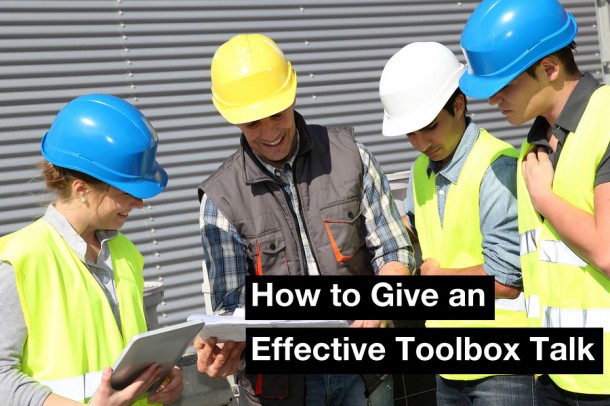
Junior workers can present on lessons from a close call. Seasoned techs can demo a best practice. This builds ownership and surfaces diverse insights.
Guidelines for peer-led talks: - Provide a simple template (topic, 3 key points, one question) - Offer coaching beforehand - Keep it voluntary at first to build confidence
You’ll find that engagement rises when people know they might be asked to lead next time.
Common Pitfalls to Avoid
Even well-intentioned talks go off track. Watch for these red flags:
- Too long: Over 10 minutes loses focus. Stick to one topic.
- Too vague: “Be safe today” isn’t a talk—it’s noise.
- No follow-up: If nothing changes after the talk, people learn it doesn’t matter.
- Wrong setting: Holding talks in loud, crowded, or distracting areas kills engagement.
- Only reactive: Waiting for an incident to prompt action misses prevention opportunities.
Fix these by auditing your own talks monthly. Ask: Did this change behavior?
Make It a Habit, Not a Chore
The best safety cultures don’t “do” toolbox talks—they live them.
At a leading civil construction firm, supervisors start each shift with a 7-minute huddle. The topic is posted on a whiteboard, updated daily. Workers can suggest topics via a shared sheet. After three months, near-miss reports rose 40%—not because hazards increased, but because people were paying attention.
Workflow tip: Link toolbox talks to your daily planning. If the schedule changes, the talk changes. This keeps it agile and relevant.
A toolbox talk isn’t about checking a box. It’s about creating a moment of shared attention where safety becomes real.
You don’t need fancy tools or lengthy scripts. You need focus, honesty, and a willingness to talk—really talk—about what could go wrong and how to stop it.
Next time you gather your team, skip the boilerplate. Ask a real question. Share a real story. Assign a real action.
That’s how you do a toolbox talk that works.
FAQ What should a toolbox talk include? A clear topic, real-world context, hazard explanation, safe procedure, team input, and a specific action step.
How long should a toolbox talk last? Ideally 5 to 10 minutes—long enough to cover the risk, short enough to hold attention.
Who should lead a toolbox talk? Supervisors typically lead, but rotating among team members improves engagement and insight.
How often should you do toolbox talks? Daily or before high-risk tasks. Frequency depends on risk level and work changes.
Can toolbox talks prevent accidents? Yes—when they’re specific, timely, and interactive, they reinforce safe behavior and surface hidden risks.
Should toolbox talks be documented? Yes. Record attendees, topic, key points, and follow-up actions for accountability and review.
What’s the difference between a toolbox talk and a safety meeting? Toolbox talks are short, task-specific, and frequent. Safety meetings are longer, broader, and less frequent.
FAQ
What should you look for in How to Do a Toolbox Talk That Actually Works? Focus on relevance, practical value, and how well the solution matches real user intent.
Is How to Do a Toolbox Talk That Actually Works suitable for beginners? That depends on the workflow, but a clear step-by-step approach usually makes it easier to start.
How do you compare options around How to Do a Toolbox Talk That Actually Works? Compare features, trust signals, limitations, pricing, and ease of implementation.
What mistakes should you avoid? Avoid generic choices, weak validation, and decisions based only on marketing claims.
What is the next best step? Shortlist the most relevant options, validate them quickly, and refine from real-world results.