
Comedy often disguises wisdom in punchlines. Jack Whitehall’s quote — “I’m sure wherever my dad is, he’s looking down on us. He’s not dead, just very” — isn’t just a throwaway joke. It’s a masterclass in social commentary wrapped in familial teasing. On the surface, it’s a gag about his father, Michael Whitehall, being emotionally distant or physically absent — usually during one of their globetrotting misadventures on Travel Man. But peel back the laugh track, and you’ll find sharp insights into honesty, workplace dynamics, and the contradictions of human nature.
This quote, frequently shared as a “quote of the day,” resonates because it mirrors everyday experiences: the boss who’s technically present but mentally checked out, the parent who’s physically near but emotionally absent, the colleague who’s in the room but not in the conversation. Whitehall doesn’t just make us laugh — he holds up a mirror.
Let’s dissect why this line endures, and what it quietly teaches us about truth, presence, and performance — both on stage and in life.
The Power of Comedic Truth-Telling
Jack Whitehall’s humor thrives on exposing uncomfortable truths through exaggeration and timing. In this quote, the absurdity lies in the implication: his father is so detached that he might as well be dead. Of course, Michael is alive, often standing right beside him, but emotionally or socially disengaged enough to feel distant.
This kind of humor works because it’s rooted in reality. Many of us know someone — a manager, a relative, a friend — who is “not dead, just very” absent. They’re present in body but missing in spirit. Whitehall turns that universal tension into comedy, but the underlying message is serious: presence matters more than proximity.
In workplace culture, this translates directly. A leader who’s physically in the office but unapproachable, disinterested, or emotionally distant creates a culture of silence. Employees don’t feel seen. Innovation stalls. Trust erodes. Whitehall’s joke, then, becomes a warning: being there isn’t enough. You have to be there.
“The most dangerous people in any organization aren’t the loud complainers — they’re the silent disengagers. They kill culture by inches.” — Adapted from organizational psychologist Dr. Amy Edmondson
Whitehall’s comedy indirectly champions emotional availability — a trait often undervalued in high-pressure work environments.
Honesty Through the Mask of Humor
One of the most underrated tools for honesty is comedy. People tolerate truths better when they’re delivered with a smile. Jack Whitehall uses self-deprecation and familial roasting to say things that would sound harsh if spoken straight.
When he says his dad is “looking down on us,” he’s not just mocking his father’s detached demeanor — he’s also acknowledging his own need for approval. The joke reveals vulnerability disguised as sarcasm. That duality is where real honesty lives.
In professional settings, this principle applies powerfully: - A manager who jokes, “I know I sent that email at 2 a.m. — my work-life balance is a myth,” admits burnout without sounding defensive. - A team member who quips, “I’ve been ‘in meetings’ all day — mostly with my anxiety,” breaks the stigma around mental load.
Whitehall’s quote teaches us that humor can be the Trojan horse for truth. It disarms resistance and opens doors to deeper conversations about expectations, presence, and emotional labor.
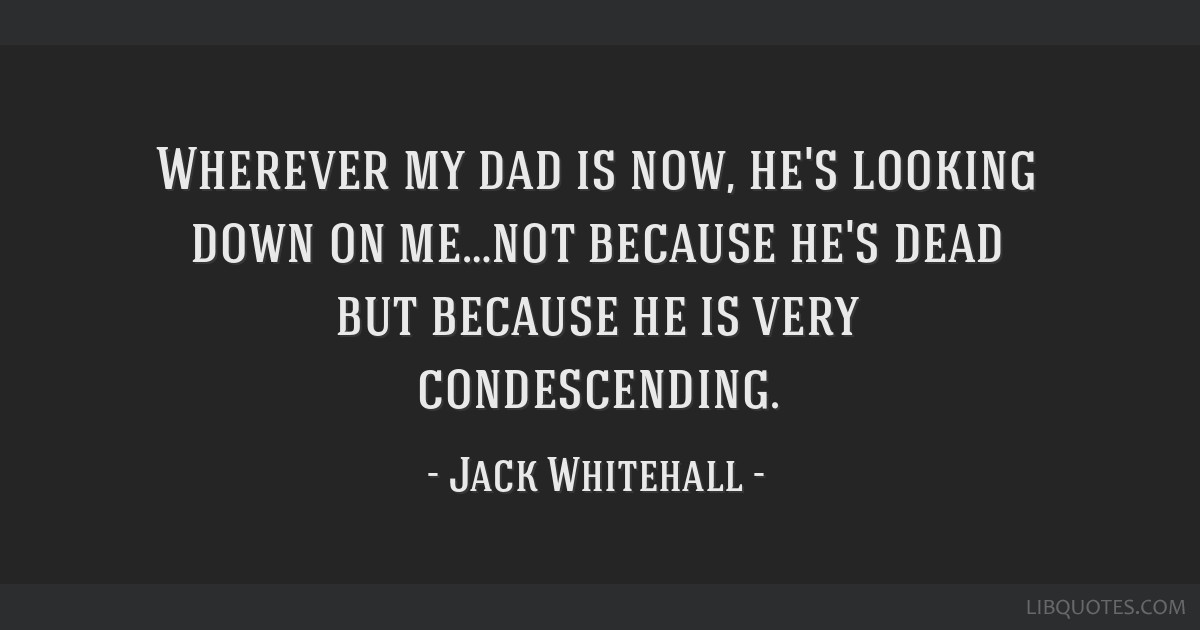
But there’s a fine line. Comedy fails when it veers into cruelty or avoidance. The difference? Intent. Whitehall mocks his father with affection, not at him. That balance — teasing without tearing down — is essential in both family and workplace dynamics.
Work Culture and the Myth of Constant Availability
Modern work culture glorifies busyness. We wear exhaustion like a badge. Slack pings at midnight? Proof of dedication. Back-to-back Zooms? A sign of importance. But Jack Whitehall’s joke cuts through this illusion.
His father’s “not dead, just very” absence mirrors the modern professional who’s technically available but functionally absent. Think of the colleague who joins a call but never speaks. The executive who delegates everything but owns nothing. The remote worker whose status says “online” but hasn’t contributed in days.
This kind of presence is performative, not productive.
Whitehall’s humor exposes the absurdity of valuing visibility over contribution. In today’s hybrid and remote work environments, output should matter more than optics. Yet many companies still measure commitment by screen time, not impact.
Practical example: A marketing team has two members: - Alex is always online, replies instantly, attends every optional meeting — but misses deadlines and produces generic content. - Sam works quietly, delivers early, writes high-performing copy — but rarely turns on camera.
Who’s more valuable? Sam. But who gets praised in a visibility-driven culture? Alex.
Whitehall’s quote reminds us: being “not dead” — i.e., technically present — isn’t the same as being engaged, useful, or human.
Human Nature: The Gap Between Image and Reality
At its core, this quote is about the masks we wear. Jack presents himself as the vain, pampered son. Michael plays the stoic, unimpressed father. But over seasons of Travel Man and live shows, the audience sees the love beneath the barbs.
This duality reflects a broader truth about human nature: we perform roles to protect ourselves. The distant dad. The overachieving son. The “always on” employee.
In the workplace, these roles solidify into toxic norms: - Leaders pretend they have all the answers. - Employees hide mistakes for fear of blame. - Teams avoid hard conversations to preserve harmony.
But as Whitehall’s comedy shows, truth emerges through contrast. The funnier the gap between image and reality, the more revealing the joke. And once we laugh at the absurdity, we can start fixing it.
Companies that encourage psychological safety — where people can say “I don’t know” or “I messed up” — outperform those that reward façades. Google’s Project Aristotle found that psychological safety was the #1 factor in high-performing teams.
Whitehall’s quote, in its own way, advocates for that safety. By mocking the performance of fatherhood (and sonhood), he invites authenticity.
The Wisdom in Familial Banter
Jack and Michael Whitehall’s relationship is a case study in how humor can sustain connection across generational and emotional divides. Michael, a former talent agent, represents old-school British reserve — stiff upper lip, minimal affection. Jack, the millennial comedian, craves validation and connection.
Their dynamic isn’t just funny — it’s instructive.
In family life, as in work: - Unspoken expectations build resentment. - Emotional withholding creates distance. - Humor can bridge the gap — if it’s rooted in love.
The quote “I’m sure wherever my dad is, he’s looking down on us. He’s not dead, just very” works because it’s true and tender. It’s a son saying, “You’re hard to reach, Dad — but I still want you to see me.”
That desire — to be seen, to matter — is universal. In leadership, ignoring it is costly. Gallup finds that feeling unrecognized is a top reason employees quit.
So what’s the takeaway? Whether you’re a parent, a manager, or a teammate: don’t just be present — participate. Put the phone down. Ask real questions. Respond, don’t just react.
Applying Whitehall’s Lessons to Real Life
How can we use this quote not just to laugh, but to grow?
Here are actionable steps:
- Audit Your Presence
- At the end of each day, ask: Was I truly engaged — or just physically there? Apply this to meetings, family dinners, one-on-ones.
- Use Humor to Surface Tension
- Instead of saying “You never listen,” try: “I know you’re not dead, just very… elsewhere right now.” Lightness can open doors that seriousness slams shut.
- Reward Output, Not Theater
- In teams, measure results — not response times, camera usage, or meeting attendance.
- Normalize Emotional Availability
- Leaders: share a struggle. Parents: admit a mistake. Colleagues: say “I need help.” Model the behavior you want to see.
- Embrace the Roast — With Boundaries
- Friendly teasing builds bonds — but only if both sides feel safe. If humor starts to wound, it’s time to pause.
Jack Whitehall’s comedy works because it’s human. It doesn’t preach — it reveals. And in doing so, it teaches us more about honesty, culture, and connection than most corporate training modules ever could.
Final Thought: Laughter as a Lens
Jack Whitehall’s quote of the day isn’t just a joke. It’s a reflection of how we live, work, and relate. It captures the quiet tragedies of emotional absence, the absurdity of performative presence, and the healing power of honest humor.
We don’t need grand speeches to learn life lessons. Sometimes, all it takes is a comedian saying his dad is “not dead, just very” — and the rest of us nodding, laughing, and thinking, That’s exactly how I feel at work today.
So the next time you’re in a meeting where everyone’s present but no one’s there, remember Jack’s words. Then ask yourself: Am I showing up — or just showing off?
FAQ
What does Jack Whitehall mean by “He’s not dead, just very”? It’s a comedic way of saying his father is emotionally or socially distant despite being physically present — a jab wrapped in affection.
Where did Jack Whitehall say this quote? It’s a recurring bit from his stand-up routines and Travel Man episodes with his father, Michael Whitehall.
Is Jack Whitehall close to his dad? Yes — their on-screen dynamic is exaggerated for comedy. In reality, they have a close, if teasing, relationship.
How does this quote relate to workplace culture? It highlights the difference between physical presence and genuine engagement — a key issue in remote and hybrid work environments.
Can humor improve honesty in teams? Yes, when used constructively. Light-hearted truth-telling can break tension and encourage openness without defensiveness.
Why do people share this as a “quote of the day”? It’s relatable, funny, and layered — making it perfect for sparking reflection or conversation.
What’s the deeper message behind the joke? True connection requires emotional availability, not just physical presence — whether with family or coworkers.
FAQ
What should you look for in Jack Whitehall’s Quote of the Day: A Lesson in Honesty and Humanity? Focus on relevance, practical value, and how well the solution matches real user intent.
Is Jack Whitehall’s Quote of the Day: A Lesson in Honesty and Humanity suitable for beginners? That depends on the workflow, but a clear step-by-step approach usually makes it easier to start.
How do you compare options around Jack Whitehall’s Quote of the Day: A Lesson in Honesty and Humanity? Compare features, trust signals, limitations, pricing, and ease of implementation.
What mistakes should you avoid? Avoid generic choices, weak validation, and decisions based only on marketing claims.
What is the next best step? Shortlist the most relevant options, validate them quickly, and refine from real-world results.