
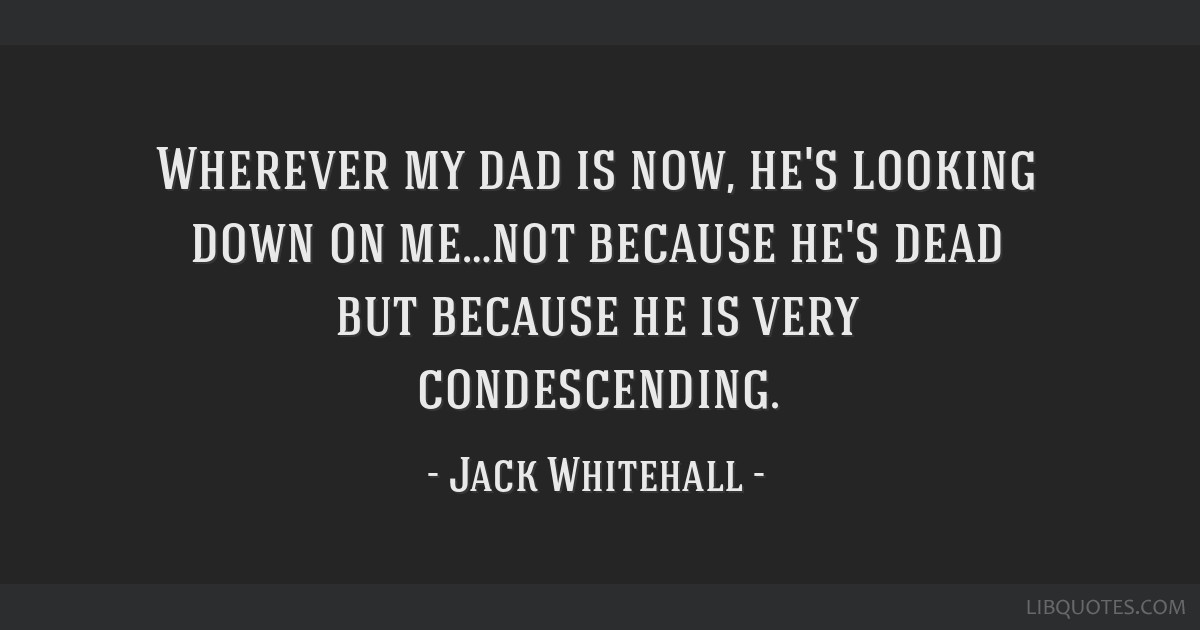
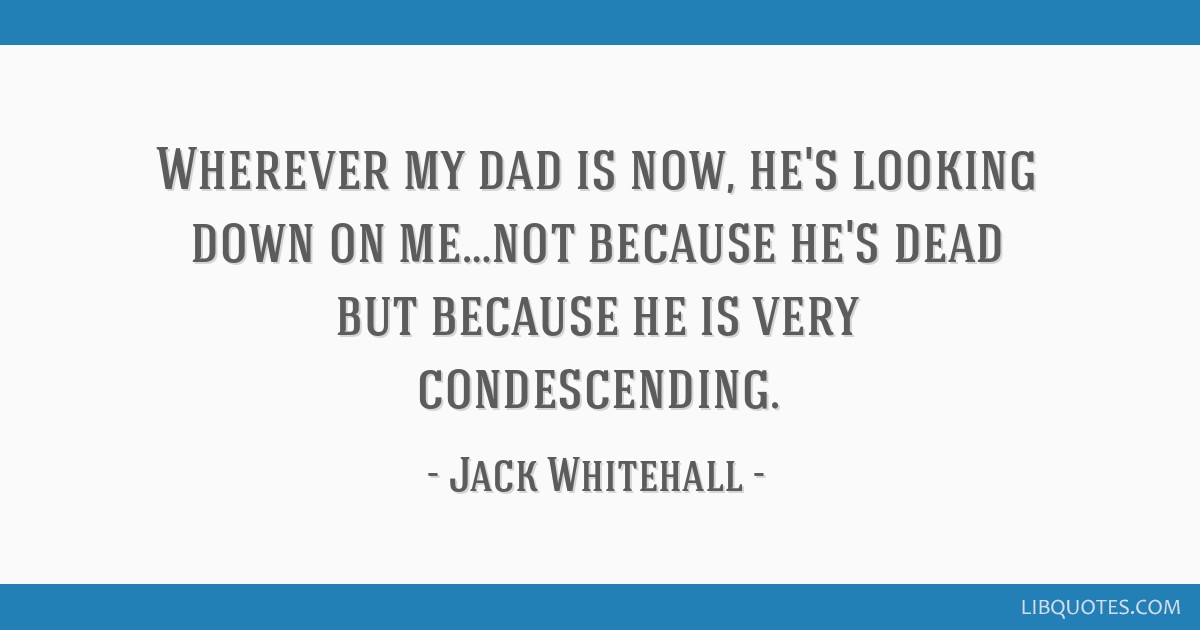
Jack Whitehall’s quote—“I’m sure wherever my dad is, he’s looking down on us. He’s not dead, just very…”—lands with the precision of a well-timed punchline, yet lingers like meaningful insight. Delivered in his signature deadpan style, it's both a comedic deflection and a quiet reflection on presence, perception, and the masks we wear in family, work, and society.
On the surface, it’s a joke. But peel back the delivery, and it’s a commentary on how we mythologize people while they’re still alive—especially parents, authority figures, and leaders. It also cuts into deeper themes: honesty in relationships, authenticity in performance (both on stage and in office culture), and the contradictions inherent in human nature.
This quote, often shared as a “quote of the day,” does more than entertain. It opens a conversation about how we navigate truth, duty, and emotional transparency in modern life.
The Comedy of Truth: Why Jack Whitehall’s Humor Resonates
Jack Whitehall has built a career on the friction between expectation and reality—particularly between his polished, privileged exterior and the chaotic emotional truths underneath. His dynamic with his father, Michael Whitehall, is central to this. Their travel documentaries, stand-up routines, and public appearances thrive on the contrast between Michael’s old-school British restraint and Jack’s irreverent self-awareness.
The quote “He’s not dead, just very…” is classic Whitehall. It sets up a familiar trope—the deceased loved one watching over us—then subverts it with a mundane twist. The humor comes from the deflation of sentimentality. But so does the insight.
In comedy, timing is everything. In life, honesty is. Whitehall’s best lines work because they expose the gap between what we pretend and what we feel. That gap? It’s everywhere—in families, in boardrooms, in social media feeds.
Consider this: How often do we say “I’m fine” when we’re not? Or praise a colleague’s idea when we think it’s flawed? Whitehall’s joke about his dad isn’t just about parental relationships. It’s about the stories we tell to maintain appearances.
Honesty in the Age of Performance
We live in a culture of performance. At work, we project confidence. On social media, we curate success. Even in family roles—son, daughter, parent—we often play characters shaped by duty, not truth.
Whitehall’s quote subtly critiques that performance. By joking that his dad is “looking down on us” while very much alive, he highlights the absurdity of speaking about people as if they’re not present—emotionally or physically.
In the workplace, this same dynamic plays out daily.
- Employees nod in meetings while silently disagreeing.
- Managers avoid difficult feedback to keep peace.
- Teams celebrate “transparency” while withholding real concerns.
This isn’t just dishonesty. It’s emotional labor—managing feelings to meet social or professional expectations. And like any labor, it comes with fatigue.
Whitehall’s comedy works because it refuses to uphold that labor. He calls out the awkward silences, the unspoken judgments, the generational disconnects. In doing so, he models a kind of emotional honesty many aspire to but few practice.
Practical takeaway: Next time you’re in a meeting or family gathering, notice how often people speak about someone instead of to them. Try redirecting the conversation. “You mentioned Dad’s opinion—why don’t we ask him?” This small shift builds cultures of inclusion and truth.
Work Culture and the British Stiff Upper Lip
Jack Whitehall’s humor is deeply rooted in British culture—particularly its obsession with class, politeness, and emotional repression. His father, a veteran talent agent, embodies the old-world professionalism: reserved, protocol-driven, emotionally contained.
That archetype still lingers in many workplaces, especially in traditional industries like law, finance, and media. The “stiff upper lip” isn’t just a personality trait—it’s a cultural script. Don’t complain. Don’t show weakness. Don’t make things awkward.
But modern work culture is shifting. Psychological safety, emotional intelligence, and vulnerability in leadership are now buzzwords for a reason. Google’s Project Aristotle found that the highest-performing teams weren’t the smartest or best-resourced—they were the ones where people felt safe to speak up.
Whitehall’s joke exposes the cost of the old model. When we pretend our parents (or bosses) are “looking down on us” from some distant moral high ground, we avoid real dialogue. We turn living people into icons, and icons don’t have flaws. They also can’t grow.
In a work context, this means:
- Leaders are seen as infallible, so feedback is stifled.
- Mistakes are hidden, not learned from.
- Innovation stalls because risk is punished.
Whitehall’s comedy cuts through that by humanizing authority. He shows his dad not as a figurehead, but as a man who wears weird socks, gets motion sickness, and doesn’t understand modern slang. That demystification is powerful.
Real-world example: A CEO who shares a personal failure in a company all-hands meeting sets a tone of authenticity. It’s not about oversharing—it’s about permission. Permission to be human. That’s where trust—and better performance—begins.
Human Nature and the Myth of the Perfect Parent
The quote also touches on a universal truth: we mythologize our parents. We assign them omniscience, moral authority, emotional stability—often long after we’ve realized they’re just as flawed as we are.
Whitehall’s relationship with his father is built on exposing that myth. Their travel series Jack Whitehall: Travels with My Father isn’t just comedy. It’s a slow unraveling of the father-as-authority trope. In Bali, they argue about cultural sensitivity. In South Africa, Jack pushes Michael out of his comfort zone. The humor comes from discomfort—but the heart comes from connection.
This dynamic mirrors broader human tendencies:
- We elevate people in power (parents, bosses, celebrities) beyond their humanity.
- We avoid holding them accountable because it feels disrespectful.
- We inherit their flaws without questioning them.
But growth starts with seeing people clearly—not as legends, but as individuals with strengths, biases, and blind spots.
Whitehall doesn’t mock his father. He sees him. And in doing so, he models a mature kind of love: one based on honesty, not idealization.
Limitation to consider: Absolute honesty isn’t always kind. There’s a difference between truth and cruelty. The goal isn’t to weaponize transparency, but to practice constructive honesty—timely, respectful, and purposeful.
Lessons for Everyday Life
So what can we take from Jack Whitehall’s quote beyond the laugh?
- Presence matters more than reverence
- Instead of treating people as if they’re “looking down on us,” engage with them while they’re here. Ask questions. Share feelings. Disagree respectfully.
- Humor can be a gateway to hard conversations
- Whitehall uses comedy to talk about generational gaps, emotional distance, and aging. You don’t need to be a comedian, but you can use lightness to defuse tension and open dialogue.
- Cultivate cultures of feedback
- Whether at home or work, create spaces where people can speak honestly without fear. Start small: “What’s one thing we could do differently?” works better than “Is everything okay?”
- Challenge the performance
- Notice when you’re playing a role—employee, son, friend—and ask: Is this authentic? Is it serving me or just expectations?
- Legacy isn’t about being perfect—it’s about being present
- Whitehall’s joke implies his dad is still here, still influential, still part of the story. That’s a more meaningful legacy than being remembered as flawless.
Why This Quote Endures
“Quote of the day” features often pull lines from philosophers, poets, or activists. Jack Whitehall’s inclusion in that space—alongside figures like Maya Angelou or Marcus Aurelius—says something important: comedy can be wisdom in disguise.
His line works because it’s layered. It’s funny. It’s relatable. It’s quietly profound. It captures the British tendency to avoid emotional talk, while also mocking it. And it reminds us that the people we respect most are, at their core, human.
In a world of curated personas and performative virtue, that honesty—delivered with a smirk—is revolutionary.
Workflow tip: Use humor strategically in professional settings. A well-placed, self-deprecating joke can break tension, build rapport, and make difficult messages more palatable. Just ensure it’s inclusive, not at someone’s expense.
Jack Whitehall’s joke about his dad isn’t just a punchline. It’s a lens. Through it, we see the stories we tell, the roles we play, and the truths we avoid. The best quotes don’t give answers. They make us ask better questions.
Start today: Have one conversation—personal or professional—where you choose honesty over performance. Not harshness. Not drama. Just truth, delivered with care.
That’s how culture changes. One real moment at a time.
FAQ
What is Jack Whitehall’s most famous quote? While not a traditional “motivational” figure, one of his most shared lines is: “I’m sure wherever my dad is, he’s looking down on us. He’s not dead, just very…”—a blend of humor and familial insight.
Is Jack Whitehall close to his dad? Yes. Their relationship, once strained by emotional distance, has evolved through their collaborative travel documentaries, revealing deeper connection and mutual respect.
What is the message behind Jack Whitehall’s comedy? His work often explores the gap between social performance and emotional truth, especially in family dynamics, class structures, and British cultural norms.
How does Jack Whitehall use humor to address serious topics? He uses irony, self-deprecation, and exaggerated contrasts to talk about aging, masculinity, and emotional repression—making difficult subjects more approachable.
Can comedy influence workplace culture? Yes. Humor, when used inclusively, can reduce tension, encourage openness, and humanize leadership—key elements in building psychological safety.
Why do people quote Jack Whitehall as a “life lessons” figure? Because beneath the jokes lies sharp observation about human behavior, honesty, and the contradictions in how we relate to authority and family.
What can we learn from the Whitehall father-son relationship? That relationships can evolve, emotional distance can be bridged, and authenticity—even when awkward—is the foundation of real connection.
FAQ
What should you look for in Jack Whitehall’s Quote of the Day on Legacy and Honesty? Focus on relevance, practical value, and how well the solution matches real user intent.
Is Jack Whitehall’s Quote of the Day on Legacy and Honesty suitable for beginners? That depends on the workflow, but a clear step-by-step approach usually makes it easier to start.
How do you compare options around Jack Whitehall’s Quote of the Day on Legacy and Honesty? Compare features, trust signals, limitations, pricing, and ease of implementation.
What mistakes should you avoid? Avoid generic choices, weak validation, and decisions based only on marketing claims.
What is the next best step? Shortlist the most relevant options, validate them quickly, and refine from real-world results.